

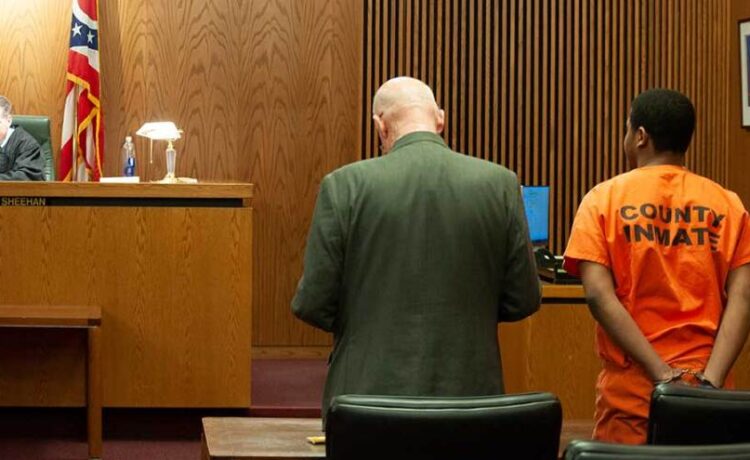
The criminal court stands as one of the most consequential arenas in any legal system. Within its solemn chambers, liberty and accountability are weighed with meticulous care. Here, the state and the accused meet face-to-face under the gaze of justice, where every decision has the potential to change lives irrevocably. Yet, despite its gravity and visibility, the criminal court remains widely misunderstood. To many, it is a stage for high-stakes drama; to others, it is a cold bureaucratic process. In truth, it is both more intricate and more essential than these impressions suggest. Understanding how the criminal court functions—and the principles that underpin it—offers a deeper appreciation of the role it plays in preserving the rule of law and public trust.
The Essence of the Criminal Court
At its core, a criminal court is the forum through which criminal cases are adjudicated. It exists to determine whether an individual accused of a crime is guilty beyond a reasonable doubt, and if so, to impose an appropriate penalty. But beyond this procedural function, the criminal court embodies broader ideals: fairness, transparency, due process, and the protection of individual rights against the immense power of the state.
Criminal courts are distinct from civil courts in both purpose and structure. While civil courts resolve disputes between private parties, criminal courts address offenses deemed harmful to society at large. As such, the prosecution is typically brought by the government, representing the interests of the public.
Key Components of a Criminal Court
The criminal court is not a monolithic entity; it is composed of several key actors and processes, each playing a vital role in delivering justice. Understanding these elements provides clarity on how the system operates.
1. The Judge
The judge presides over the court, ensuring that legal procedures are followed and ruling on matters of law. In jury trials, the judge acts as a neutral arbiter, while the jury decides the facts. In bench trials, the judge assumes both roles.
2. The Prosecutor
The prosecutor represents the state and is responsible for presenting the case against the accused. Their duty is not merely to secure a conviction but to seek justice. This includes disclosing evidence favorable to the defense and respecting the rights of the accused.
3. The Defense Attorney
The defense attorney advocates for the accused, challenging the prosecution’s evidence and protecting the defendant’s constitutional rights. Whether privately retained or court-appointed, a defense attorney plays a crucial role in balancing the adversarial system.
4. The Defendant
The individual on trial, presumed innocent until proven guilty. The burden of proof lies entirely on the prosecution, a cornerstone principle that ensures fairness and reduces the risk of wrongful convictions.
5. The Jury (if applicable)
In many jurisdictions, serious criminal cases are decided by a jury—a group of citizens tasked with determining guilt based solely on the evidence presented. Their verdict must typically be unanimous, reflecting the high standard of proof required in criminal cases.
The Criminal Trial Process
A criminal trial is a meticulously structured sequence designed to ensure justice is both done and seen to be done.
The typical process includes:
-
Arraignment: The defendant is formally charged and enters a plea.
-
Pre-Trial Motions: Both sides may request rulings on evidence, procedure, or dismissal.
-
Jury Selection: If a jury trial is chosen, both sides select jurors through a process known as voir dire.
-
Opening Statements: Both the prosecution and defense outline their case to the jury.
-
Presentation of Evidence: Witnesses are examined and cross-examined, and physical evidence is introduced.
-
Closing Arguments: Each side summarizes their position and urges the jury to adopt their view.
-
Jury Instructions and Deliberation: The judge instructs the jury on the law, and they deliberate privately.
-
Verdict and Sentencing: If found guilty, the defendant proceeds to a separate sentencing phase.
Throughout this process, constitutional protections such as the right to remain silent, the right to counsel, and the right to a fair and public trial remain firmly in place.
The Philosophy of Criminal Justice
The criminal court does not merely exist to punish wrongdoing—it reflects society’s values and ethical boundaries. Central to its purpose is the balance between maintaining order and safeguarding liberty. In democratic societies, the criminal court serves as a safeguard against tyranny by ensuring that the government cannot deprive individuals of their freedom without strict procedural fairness and evidentiary rigor.
This is why the standard of proof in criminal cases—“beyond a reasonable doubt”—is so high. It recognizes that the consequences of a wrongful conviction are severe and irreversible. It is better, in the eyes of justice, for a guilty person to go free than for an innocent person to be wrongfully imprisoned.
Challenges Facing the Criminal Court System
Despite its noble ideals, the criminal court is not without flaws or controversy. Issues such as racial bias, economic disparities, lengthy pretrial detentions, and overburdened public defenders continue to raise serious concerns. Moreover, the increasing use of plea bargains—often driven by backlogged court dockets—means that many cases never reach trial, raising questions about whether justice is truly being served or simply expedited.
Technological advancements have also introduced new complexities. Digital evidence, surveillance tools, and AI-driven profiling challenge traditional legal frameworks and raise ethical concerns that courts must now grapple with.
The Human Side of Justice
Behind every case number is a human story—a victim seeking closure, a defendant facing the possibility of losing their freedom, families holding their breath in the gallery. The criminal court is more than a legal mechanism; it is a space where personal narratives intersect with institutional power. Judges and jurors carry the heavy responsibility of not only interpreting the law but also responding to the emotional weight of each case.
It is this human dimension that makes the criminal court so significant and so delicate. Justice is not abstract—it is lived and felt in real time, with consequences that echo far beyond the courtroom doors.
Conclusion: Justice in Practice
The criminal court remains one of the most critical institutions in any civilized society. It embodies the principle that justice must be deliberate, transparent, and fair. Though it is not without imperfections, its existence is fundamental to the protection of individual rights and the maintenance of social order.
In an era of rising complexity and evolving norms, the criminal court must continue to adapt while remaining rooted in its foundational principles. For justice to prevail, the court must be more than a place of judgment—it must be a sanctuary of fairness, integrity, and the unwavering pursuit of truth.