

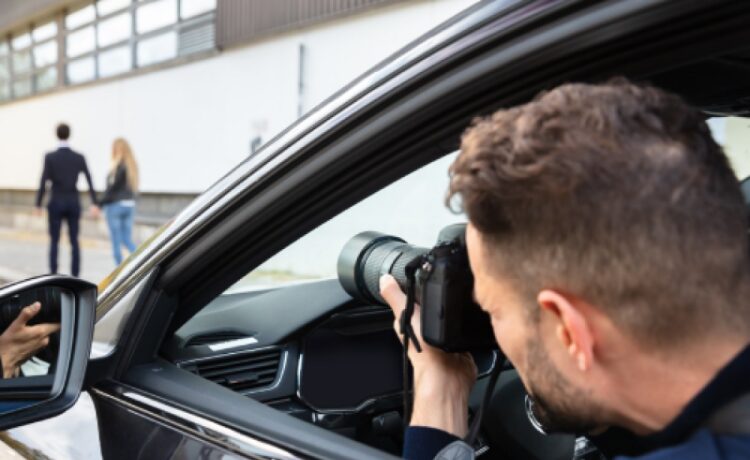
In personal injury litigation, the core of a plaintiff’s claim rests on proving liability, the extent of physical injuries, and the resulting financial and emotional damages. While medical records, expert witness testimony, and personal journals form the foundation of a claimant’s case, insurance companies and defense attorneys frequently employ counter-strategies to limit financial exposure. Among these tactics, video surveillance evidence stands out as one of the most persuasive tools used by the defense.
Surveillance evidence can transform the trajectory of a personal injury lawsuit. A single clip of video footage showing a claimant performing activities that contradict their stated physical limitations can undermine credibility, reduce settlement values, or result in a complete defense verdict. Understanding how surveillance footage is gathered, admitted into court, and countered by personal injury attorneys is essential for anyone navigating an injury claim.
The Role of Defense Surveillance in Personal Injury Claims
Insurance companies are profit-driven entities focused on minimizing payout liabilities. When a personal injury claim involves substantial monetary damages—such as long-term disability, severe pain and suffering, or lost earning capacity—defense adjusters routinely hire licensed private investigators to conduct discreet surveillance on the plaintiff.
Common Tactics Used by Private Investigators
Private investigators utilize a wide array of legal observation techniques to capture footage of claimants during their daily routines.
-
Stationary Vehicle Surveillance: Investigators park unmarked vehicles near the plaintiff’s home or workplace to record activities as they enter and exit buildings, carry groceries, or perform yard work.
-
Mobile Tracking: Investigators follow claimants to public locations, including shopping centers, gyms, gas stations, and social gatherings, documenting their physical mobility and demeanor.
-
Digital and Social Media Monitoring: Investigators scrape public social media profiles, reviewing uploaded photos, videos, check-ins, and tagged content that might contradict claims of severe physical impairment.
-
Pretext Investigations: While restricted by legal boundaries, investigators may contact neighbors, business associates, or acquaintances under minor pretenses to gather information regarding the plaintiff’s daily routine.
The primary objective of these investigative techniques is not necessarily to catch the plaintiff engaging in strenuous athletic feats, but rather to uncover minor inconsistencies between reported physical restrictions and real-world behavior.
High-Value Targets for Defense Investigators
Investigators focus their lenses on specific activities that directly challenge common personal injury claims.
-
Lifting and Carrying Heavy Objects: Capturing footage of a claimant carrying heavy groceries, furniture, or luggage when they claim an inability to lift objects over ten pounds.
-
Mobility and Range of Motion: Filming a claimant bending, stooping, twisting, or reaching overhead without visible signs of discomfort or the use of prescribed assistive devices like canes or braces.
-
Recreational and Social Engagement: Documenting participation in outdoor activities, coaching sports, attending concerts, or traveling while claiming severe emotional distress or total disability.
-
Driving and Commuting: Observing long periods of unassisted driving when the plaintiff claims severe neck or back pain prevents prolonged sitting.
Even brief moments captured on video can be presented in court to paint a picture of physical health that contradicts sworn deposition testimony.
Admissibility and Legal Standards for Video Evidence
Video footage is not automatically admissible in a court of law simply because a private investigator captured it. The defense must satisfy strict legal standards and procedural rules established by state and federal law before surveillance evidence can be shown to a jury.
Foundation and Authentication
To introduce video evidence, the defense must lay a proper legal foundation. This typically requires calling the private investigator to testify under oath regarding the authenticity and accuracy of the footage.
-
Chain of Custody: Proving that the video recording was securely stored, maintained, and preserved without unrecorded edits or tampering from the time of capture to the court date.
-
Verification of Accuracy: Confirming that the camera equipment was functioning correctly and that the footage accurately represents the events observed on that specific date and time.
-
Identification of the Subject: Formally verifying under oath that the person depicted in the video is indeed the plaintiff in the lawsuit.
Failure to establish authentication can result in the judge excluding the surveillance video from evidence entirely.
Discovery Obligations and Timing of Disclosure
One of the most contested legal battles surrounding surveillance evidence involves the timing of its disclosure during pre-trial discovery.
-
The Work-Product Privilege Defense: Defense attorneys frequently argue that surveillance footage constitutes protected attorney work-product, attempting to withhold the video until after the plaintiff’s formal deposition is complete.
-
Preventing Testimony Adjustment: The defense strategy relies on locking the plaintiff into specific sworn statements during a deposition regarding their physical limitations, only to impeach their credibility later by revealing conflicting video footage.
-
Mandatory Disclosure Rules: In many jurisdictions, courts require the defense to disclose the existence of surveillance footage prior to trial once the plaintiff has been formally deposed, granting the plaintiff’s legal team an opportunity to review the footage for accuracy and context.
Understanding local procedural rules regarding mandatory evidence disclosure enables personal injury attorneys to protect their clients from surprise evidence at trial.
How Surveillance Evidence Impacts Case Outcomes
Surveillance footage holds immense sway over juries, judges, and insurance adjusters because visual evidence is inherently memorable and persuasive. The introduction of surveillance video can alter a case in several fundamental ways.
Destruction of Plaintiff Credibility
Credibility is the single most critical asset in a personal injury lawsuit. If a jury believes a claimant is honest, they are far more likely to grant a favorable verdict and award substantial damages.
Conversely, if surveillance footage reveals clear contradictions between sworn statements and physical actions, the jury may dismiss the plaintiff’s testimony entirely. Once credibility is damaged, a jury often assumes that the claimant is exaggerating every aspect of their injury, including pain levels, financial losses, and medical needs.
Devaluation of Settlement Offers
Insurance companies use video footage as financial leverage during pre-trial settlement negotiations.
If an adjuster holds compelling surveillance footage, they will drastically reduce their settlement offer or refuse to negotiate entirely, betting that a jury will side with the defense at trial. A claim once valued at hundreds of thousands of dollars can plummet in value overnight if video evidence suggests the claimant is misrepresenting their physical state.
Potential Claims of Malingering or Fraud
In severe cases where surveillance footage reveals blatant, irrefutable evidence of fabricated injuries, the consequences extend beyond civil court. The defense may move for court sanctions or case dismissal based on fraud on the court. Furthermore, insurance providers may refer the file to law enforcement authorities or state insurance fraud bureaus for criminal investigation.
Strategies for Countering Defense Surveillance
Video surveillance footage is not always the definitive proof the defense claims it to be. Videos can be deceptive, out of context, or selectively edited. Experienced personal injury attorneys employ specific legal strategies to neutralize or counter defense surveillance.
Contextualizing Good Days and Bad Days
Chronic pain, spinal injuries, and neurological conditions rarely manifest in a static, uniform manner. Most injured individuals experience fluctuating symptom severity, characterized by good days and bad days.
-
Medical Expert Testimony: Plaintiffs’ attorneys utilize treating physicians and medical experts to explain to the jury that brief periods of activity do not indicate full recovery.
-
Post-Activity Consequences: Showing that while a claimant managed to carry a heavy item or attend an event, the physical exertion resulted in severe pain, fatigue, or days of bed rest immediately following the activity.
-
Medication Effects: Demonstrating that the claimant was able to move fluidly in the video only because they were under the temporary influence of strong prescription pain medications.
Framing the footage within the reality of chronic medical conditions helps juries understand that short video clips do not disprove long-term physical impairment.
Exposing Selective Editing and Misleading Angles
Video cameras do not record absolute truth; they capture limited visual fields from specific angles. Defense investigators often record hours of footage but edit the content down to brief, isolated moments that favor their narrative.
-
Demanding Raw Footage: Plaintiffs’ attorneys file legal motions demanding the complete, unedited raw video footage, including all recorded hours where the plaintiff was resting, using assistive devices, or displaying visible pain.
-
Highlighting Omitted Context: Showing the jury that out of forty hours of surveillance, the investigator only captured two minutes of physical activity, proving that the plaintiff spends ninety-five percent of their time sedentary.
-
Challenging Optical Distortions: Utilizing forensic media experts to show how telephoto lenses, camera distance, and perspective can make an object look heavier or an action appear effortless when it was actually performed with difficulty.
Exposing the selective nature of the investigator’s work can turn the surveillance tactic against the defense, demonstrating to the jury that the insurance company acted in bad faith to misrepresent the truth.
Frequently Asked Questions
Can a private investigator record me inside my home or through my windows?
No. Private investigators must adhere to privacy laws and are strictly prohibited from trespassing on private property or recording individuals inside their homes where there is a reasonable expectation of privacy. Capturing footage through closed blinds, private bedroom windows, or inside fenced backyards constitutes an illegal invasion of privacy, and such evidence is inadmissible in court. However, investigators can legally record anything visible from a public street or sidewalk.
Does a private investigator have to tell me they are following or filming me?
No. Private investigators operating on behalf of defense attorneys or insurance companies work covertly and are under no legal obligation to notify you that you are under surveillance. As long as they remain on public property or in places open to the general public, they can observe and record your public actions without your knowledge or consent.
What should I do if I notice a suspicious vehicle parked near my house?
If you spot an unmarked vehicle parked near your residence that you suspect belongs to a private investigator, do not confront the driver, engage in aggressive behavior, or attempt to block their vehicle. Document the vehicle’s make, model, color, and license plate number, and notify your personal injury attorney immediately. If you ever feel unsafe or suspect immediate danger, contact local law enforcement authorities.
Can defense investigators use public social media posts as surveillance evidence?
Yes. Social media monitoring is one of the most common forms of modern surveillance. Photos, videos, comments, and location check-ins published on public social media profiles are fully admissible as evidence in personal injury claims. Defense attorneys frequently use social media content showing vacations, workouts, or social gatherings to challenge claims of physical disability or severe mental anguish.
Should I stop engaging in physical activities or leaving my house entirely to avoid surveillance?
No. You should continue living your life normally while strictly following the medical treatment plans and physical activity restrictions prescribed by your treating physicians. The key to mitigating surveillance risk is consistency. As long as your daily actions align honestly with what you have reported to your doctors and stated during sworn depositions, surveillance footage will generally confirm, rather than contradict, your claim.
Can my lawyer get a copy of the surveillance footage before I testify in my deposition?
The timing depends on the specific jurisdiction and local court rules governing your case. In some states, courts mandate that the defense must turn over all surveillance videos before taking the plaintiff’s deposition. In other jurisdictions and federal courts, judges allow the defense to complete the plaintiff’s deposition first to lock in their testimony before producing the surveillance footage. Your attorney will know the specific procedural rules applicable to your venue.
What happens if an investigator captures me using a cane on some days but not on others?
Inconsistent use of assistive devices is common among individuals suffering from fluctuating pain or recovering from severe injuries. If explained properly by your treating physician, variable cane usage does not automatically derail a claim. Your doctor can testify that your injury causes erratic pain spikes, making assistive devices necessary on high-pain days while allowing unassisted mobility on milder days. Transparency regarding your varying daily condition is the best defense against surveillance footage.