

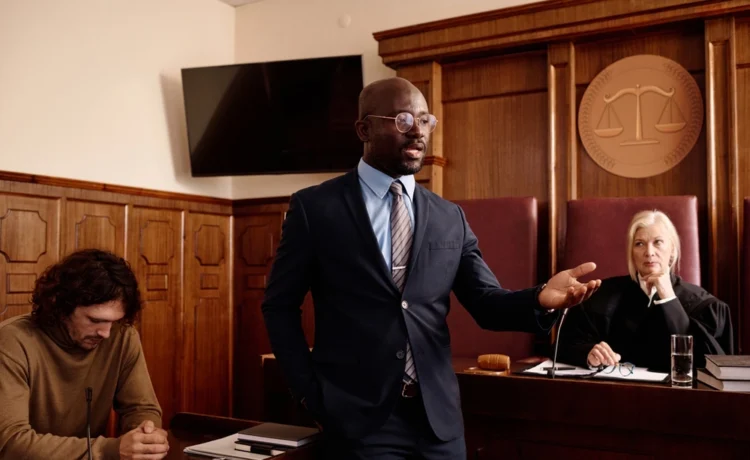
The American criminal justice system operates on an adversarial model. On one side stands the state, equipped with police departments, forensic laboratories, and public prosecutors. On the other side stands the accused individual, facing potential loss of liberty, heavy financial penalties, or permanent damage to their personal and professional reputation. A criminal defense attorney serves as the essential counterweight in this system, ensuring that individual constitutional rights are protected, state power is kept in check, and every defendant receives a fair trial under the law.
Far beyond simply arguing in front of a judge or jury, a defense attorney acts as an investigator, legal strategist, negotiator, and counselor. From the moment an arrest occurs through investigation, pre-trial hearings, trial proceedings, and sentencing, the defense counsel navigates complex legal procedures to secure the best possible outcome for their client.
Guiding Principles of Criminal Defense Law
To understand the core duties of a defense attorney, it is necessary to examine the constitutional principles that govern the American legal system. A defense attorney does not exist to justify wrongful actions; rather, they serve as the ultimate guardian of constitutional due process.
The Presumption of Innocence and Standard of Proof
In any criminal prosecution, the law presumes that the defendant is innocent until proven guilty. The prosecution carries the absolute burden of proving every element of the alleged crime beyond a reasonable doubt.
-
No Duty to Prove Innocence: The defense counsel is not required to prove that the client is innocent or identify the true culprit.
-
Testing State Evidence: The core function of the defense is to highlight gaps, inconsistencies, and logical flaws in the state’s case to create reasonable doubt in the minds of the judge or jury.
-
Preserving Constitutional Protections: Ensuring that law enforcement agencies do not bypass statutory rights or constitutional procedures while gathering evidence.
By holding prosecutors strictly to this high standard of proof, defense attorneys protect all citizens against arbitrary state overreach.
Constitutional Rights Guaranteed by the Bill of Rights
A defense attorney serves as the primary advocate for a client’s constitutional protections, particularly those granted under the Fourth, Fifth, Sixth, and Eighth Amendments.
-
Fourth Amendment: Protection against unreasonable searches and seizures, ensuring that evidence obtained through unlawful police entry or warrantless searches is excluded from court.
-
Fifth Amendment: Safeguards against self-incrimination (the right to remain silent) and guarantees protection against double jeopardy.
-
Sixth Amendment: Guarantees the right to a speedy and public trial, an impartial jury, confrontation of adverse witnesses, and effective assistance of legal counsel.
-
Eighth Amendment: Protects individuals from excessive bail amounts and cruel or unusual punishments.
Enforcing these rights requires deep legal knowledge, meticulous procedural compliance, and assertive litigation tactics.
Pre-Trial Responsibilities and Case Preparation
A significant portion of a defense attorney’s work occurs long before the trial begins. Pre-trial preparation lays the foundation for a successful legal strategy, often leading to dismissed charges or favorable plea negotiations without needing a full trial.
Conducting Independent Investigations
Defense attorneys cannot rely solely on the police reports provided by the prosecution. They must conduct independent, thorough investigations to gather exculpatory evidence.
-
Client Interviews: Establishing a confidential, trust-based environment under attorney-client privilege to gather a detailed, honest narrative of events.
-
Witness Analysis: Locating, interviewing, and taking formal statements from eyewitnesses, character witnesses, and alibi sources.
-
Forensic and Technical Review: Examining physical evidence, surveillance video, digital metadata, DNA profiles, and toxicology reports, often hiring independent expert witnesses to challenge the state’s forensic claims.
-
Crime Scene Inspections: Visiting and analyzing physical locations to verify line-of-sight constraints, lighting conditions, and spatial timelines relevant to the incident.
Uncovering a single overlooked detail during the pre-trial investigation can fundamentally alter the trajectory of a criminal case.
Pre-Trial Motions and Suppression of Evidence
One of the most effective tools in a defense attorney’s arsenal is the pre-trial motion. Through formal written petitions, defense counsel asks the court to make specific legal rulings prior to trial.
-
Motion to Suppress Evidence: Demands the exclusion of physical items, confessions, or witness identifications obtained in violation of the defendant’s constitutional rights.
-
Motion to Dismiss: Requests the court to drop charges entirely due to lack of probable cause, technical defects in the indictment, or violations of the right to a speedy trial.
-
Motion for Discovery: Compels the prosecution to disclose all relevant evidence, including Brady material—exculpatory evidence held by the state that favors the defense.
-
Motion in Limine: Asks the court to prohibit the prosecution from mentioning prejudicial or irrelevant topics in front of the jury.
If a motion to suppress successfully eliminates key prosecution evidence, such as a coerced confession or an illegally seized weapon, the state may be forced to dismiss the charges.
Plea Bargaining and Strategic Negotiations
Statistically, the vast majority of criminal cases in the United States are resolved through plea bargaining rather than jury trials. A defense attorney plays a crucial role as a skilled negotiator during this process.
Evaluating Case Risk and Client Counseling
Plea bargaining involves balancing potential legal risks against guaranteed outcomes. The defense attorney must assess the strength of the state’s case, local judicial sentencing patterns, and the potential penalties of going to trial.
-
Advising, Not Deciding: The attorney provides candid legal advice regarding the risks of a trial, but the ultimate decision to accept a plea offer rests solely with the defendant.
-
Charge Bargaining: Negotiating with prosecutors to reduce charges to less severe offenses, such as reducing a felony to a misdemeanor.
-
Sentence Bargaining: Securing agreements for reduced prison terms, probation alternatives, community service, or entry into diversion programs.
Effective negotiation requires a deep understanding of local court customs, prosecutor motivations, and alternative sentencing frameworks.
Trial Advocacy and Courtroom Representation
When a criminal case proceeds to trial, the defense attorney takes on the role of courtroom advocate, presenting a compelling narrative to the judge or jury while strictly enforcing evidentiary rules.
Jury Selection (Voir Dire)
Jury selection is a critical first stage of any criminal trial. Through the voir dire process, the defense attorney interviews prospective jurors to identify potential biases.
-
Challenges for Cause: Requesting the dismissal of jurors who demonstrate clear bias, prejudice, or personal connections that prevent them from remaining impartial.
-
Peremptory Challenges: Exercising a limited number of statutory strikes to remove specific jurors without stating a reason, ensuring a fair and balanced panel.
Selecting an open-minded, unbiased jury is paramount to securing a fair hearing.
Opening Statements and Cross-Examination
During the trial, the defense counsel utilizes persuasive speaking, strategic questioning, and sharp cross-examination to counter the state’s presentation.
-
Opening Statement: Framing the case narrative, introducing key themes, and preparing the jury for inconsistencies in the prosecution’s evidence.
-
Cross-Examination of Prosecution Witnesses: Systematically questioning state witnesses to highlight memory gaps, inconsistencies, personal biases, or motives to fabricate testimony.
-
Direct Examination of Defense Witnesses: Presenting defense experts, character witnesses, and alibi sources to establish a clear, coherent narrative that supports innocence or doubt.
-
Closing Argument: Synthesizing the trial evidence, emphasizing missing proof, reminding the jury of the reasonable doubt standard, and issuing a final call for a verdict of not guilty.
Mastering trial procedure, evidentiary rules, and courtroom persuasion allows defense attorneys to neutralize aggressive prosecution tactics.
Post-Trial Representation and Appeals
A defense attorney’s duties do not end with a trial verdict. If a defendant is convicted or chooses to plead guilty, the defense counsel shifts focus to post-trial representation.
Sentencing Advocacy
During the sentencing phase, the defense attorney presents mitigating factors to convince the judge to impose the lowest possible penalty or alternative sentencing.
-
Mitigation Evidence: Submitting employment records, character reference letters, educational achievements, and psychological evaluations.
-
Highlighting Personal Context: Presenting background details such as lack of prior criminal history, family obligations, substance abuse struggles, or mental health conditions that warrant rehabilitation over incarceration.
-
Advocating for Diversion: Pushing for probation, home confinement, drug treatment programs, or mental health diversion courts instead of state prison.
Effective sentencing advocacy can dramatically alter the severity of the consequences a convicted individual faces.
Appeals and Post-Conviction Relief
If legal errors, judicial misconduct, or ineffective assistance of counsel occurred during the trial, the defense attorney can file post-conviction motions or formal appeals to higher courts.
-
Filing Notices of Appeal: Identifying procedural or legal errors made during trial that prejudiced the final outcome.
-
Appellate Briefing: Writing detailed legal arguments citing case law and trial transcripts to prove that the trial judge made incorrect legal rulings.
-
Oral Arguments: Appearing before appellate courts to advocate for reversing convictions, modifying sentences, or securing a new trial.
Appellate practice ensures that lower courts remain accountable to established legal precedents and constitutional standards.
Frequently Asked Questions
What is the difference between a public defender and a private defense attorney?
A public defender is a court-appointed attorney provided by the government to represent individuals who meet specific financial indigency requirements and cannot afford private legal counsel. A private defense attorney is hired directly by the client or their family. Both public defenders and private attorneys receive the same legal education, pass the same bar examinations, and are held to identical standards of professional ethics and competency.
Can a criminal defense attorney represent someone they know is guilty?
Yes, a defense attorney can and must represent a client regardless of personal beliefs about guilt or innocence. The ethical obligation of a defense attorney is not to determine moral guilt, but to ensure that the government meets its legal burden of proving guilt beyond a reasonable doubt without violating the client’s constitutional rights. However, an attorney cannot knowingly allow a client to commit perjury on the witness stand.
What should a person do immediately if they are arrested or questioned by police?
Upon arrest or police questioning, an individual should immediately invoke their Sixth Amendment right to an attorney and their Fifth Amendment right to remain silent. Politely state, “I am invoking my right to remain silent, and I want to speak with a lawyer.” Refrain from answering questions, making written statements, or discussing the incident with law enforcement or cellmates until legal counsel is present.
What is the attorney-client privilege, and how far does it extend?
Attorney-client privilege is a legal rule that keeps communications between a client and their attorney completely confidential. This privilege allows clients to speak candidly without fear that their statements will be used against them in court. The privilege applies to past events and continues even after the legal representation or the client’s life ends. The primary exception is the crime-fraud exception, which prevents attorneys from assisting in future or ongoing crimes.
What happens if a defense attorney discovers that evidence was gathered illegally?
If a defense attorney discovers that evidence was obtained through an illegal search, an unlawful arrest, or an unconstitutional interrogation, they file a formal pre-trial Motion to Suppress Evidence. The court holds an evidentiary hearing where the judge determines whether police violated constitutional standards. If the judge agrees, the illegally obtained evidence is excluded from trial under the Exclusionary Rule.
What is ineffective assistance of counsel in a criminal case?
Ineffective assistance of counsel occurs when a defense attorney’s performance falls below an objective standard of reasonable professional competence, resulting in actual prejudice to the defendant’s case. To overturn a conviction on these grounds, a defendant must prove under established constitutional standards that the attorney made egregious errors—such as failing to investigate key alibi witnesses or missing critical filing deadlines—that altered the outcome of the proceeding.
Why is bail advocacy an important part of a defense attorney’s initial work?
Bail advocacy determines whether a defendant remains incarcerated or stays free while awaiting trial. Secure pre-trial release allows defendants to keep their jobs, support their families, avoid financial ruin, and assist their defense attorney directly in gathering evidence and locating witnesses. Defense attorneys present arguments regarding community ties, lack of flight risk, and absence of public danger to secure reasonable bail amounts or release on own recognizance.